
Exam Season: What Actually Helps a Stressed Child
The single most useful thing to know going into exam season: a stressed child does not learn more than a calm one. Past a fairly low threshold they learn measurably less, because sustained stress degrades working memory and shortens sleep, which is when studying becomes knowledge.
Which means most of what helps is subtraction — and most of what parents do instinctively is addition. This page covers both, plus a few small things that support a child without adding pressure.
The short version
- You cannot reason a nervous system calm. Give a stressed child something to do with their hands before you give them advice.
- Say out loud, once, that you will love them exactly the same regardless of the result — and then behave as though that is true.
- Sleep beats revision after about 10pm. An extra hour of studying at midnight costs more than it earns.
- Ask about effort and about how they are feeling, not about how the paper went. “How did it go?” is the hardest question of the week.
What we'd actually give
 −17%
−17%Pocket of Kindness — 60 Daily Motivation Cards
$24.90$29.90One card on the desk. Says something kind without asking anything, which is rare in exam season.
 NFC ✦
NFC ✦CandyFlossCuteness Wellness Serenity Plushie
$29.90Something to hold. You cannot reason a nervous system calm, but you can give it something to do.
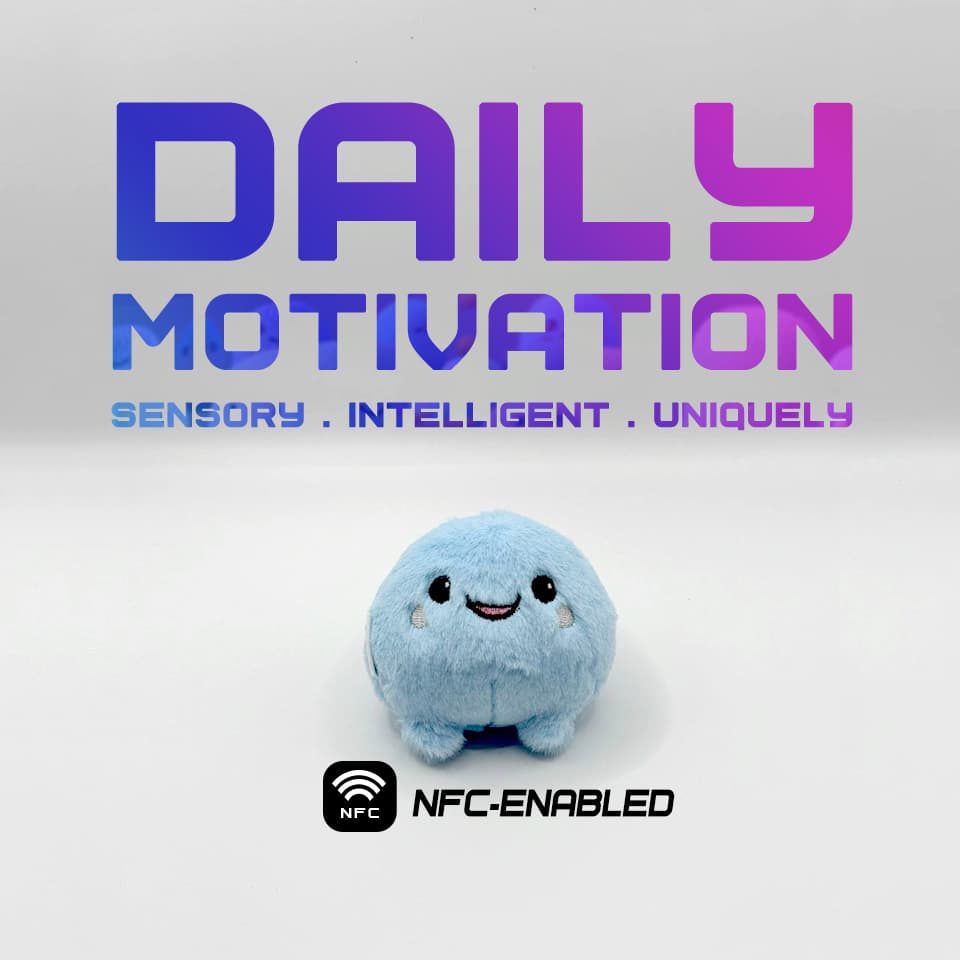 NFC ✦
NFC ✦Charm Winky CandyFlossCuteness Plushie
$25.90Small and discreet. Courage-themed messages, delivered daily.
 −13%
−13%The ASMR Colouring Book — 26 Pages of Calm
$19.90$22.90A break that isn't a screen. Occupies the hands, no skill required, no failure condition.
What actually helps a child in exam season
Exam stress is not a thinking problem, which is why explaining that the PSLE does not determine their life reliably fails. The body is doing something — a fast heart, a tight chest, an inability to settle — and the body is not listening to argument.
Things that reach the body work better. Something to hold. Something to fiddle with. A walk. A shower. Cold water on the wrists. Five slow breaths where the out-breath is longer than the in-breath. None of these are impressive interventions and all of them outperform a pep talk delivered at the kitchen table.
- Give the hands a job
- A small object in a pocket or a pencil case. This is not superstition — occupied hands genuinely reduce the physical loop that keeps anxiety running.
- Protect one non-negotiable break
- Same time each day, no negotiation, no screens if possible. Predictability is calming in a period where nothing else is.
- Defend sleep
- Revision after roughly 10pm is bought at the cost of consolidation and next-day recall. It feels productive and is not.
- Feed them properly
- Unremarkable, and routinely abandoned in the last fortnight. Blood sugar swings are indistinguishable from panic to a tired thirteen-year-old.
What to say, and what to stop saying
Say the sentence out loud. “Whatever the result, nothing changes about how I feel about you.” Children who are anxious about exams are usually anxious about disappointing someone, and they will not assume this unless it is stated — plainly, in words, more than once.
| Instead of | Try |
|---|---|
| How did it go? | You're done. What do you want to eat? |
| Just do your best | I can see how hard you've worked. That part is already finished. |
| Don't worry | This is a horrible feeling and it will pass by about Thursday. |
| Your cousin got into… | (nothing at all) |
And after a paper, resist the debrief. Comparing answers in the car is the single most reliable way to ruin an evening that could have been fine, and there is nothing left to be gained from a paper already handed in.
The Singapore context
It would be dishonest to write this page as though exam pressure here is the same as anywhere else. Between PSLE, O-Levels and A-Levels, streaming, tuition culture and family expectation, a Singaporean child can carry a weight that is genuinely structural rather than imagined. Telling them it does not matter is not reassuring — it is obviously untrue, and they know it.
What is true, and worth saying instead: the result matters, and it is not the only route to anything, and you will be fine either way. That is a more honest sentence than most of what gets said in June, and children can tell the difference.
If your child is not sleeping, not eating, has stopped seeing friends, or has said anything about not wanting to be here, that has moved beyond exam stress. Tinkle Friend, for primary-school children, is 1800 274 4788 (weekday afternoons, 2.30–5pm). SOS is 1767, or WhatsApp 9151 1767. CHAT at the Institute of Mental Health, for young people aged 16 to 30, is 6493 6500. In an emergency, call 995.
The day the results come out
Plan this in advance, because reactions in the first sixty seconds are the ones children remember for years. Decide now what your face is going to do.
If it went well, celebrate the work rather than the number — praising the score makes the next set of results a referendum on their worth. If it went badly, say almost nothing on the day. There is a conversation about next steps and it belongs to a different week entirely. On the day, the only job is to be visibly, uncomplicatedly on their side.
Before you decide
The gift matters less than the thinking behind it. These are the pieces people find most useful.
- PSLE Stress: What Helps, What BackfiresYour child is twelve and carrying something enormous. Here's what actually reduces the load — and the well-meant things that add to it.Singapore · 5 min read
- School Anxiety: A Practical Guide for the First TermThe Sunday stomach ache, the Monday refusal, and why letting them stay home makes tomorrow harder.Parenting · 6 min read
- Grounding Techniques That Work for ChildrenNine techniques, when to use each, and the one rule that decides whether any of them work.Parenting · 6 min read
- How to Help an Anxious Child (Without Making It Bigger)The instinct to reassure is the thing that keeps it going. What to do instead — and why accommodation backfires.Parenting · 6 min read
- PSLE Results Day: What to Say, and What Not ToYour child will remember the first thirty seconds for years. How to plan your reaction — whether the results are better, worse or exactly as expected.Singapore · 6 min read
Exam Season questions
How do I help my child with exam stress?
Should we cut all activities to focus on studying?
Is it worth trading sleep for revision?
What should I say when the results come out?
What is a good gift for a child taking the PSLE?
My child says they are stupid. How should I respond?
Should we cancel tuition if my child is overwhelmed?
How do I tell exam stress from something more serious?
More in our full FAQ or ask us directly.