
Gifts for Someone Going Through a Hard Time
The rule that eliminates most of what comes up when you search this: a gift for someone struggling should reduce effort, not add a task. Flowers need a vase, water and disposal. That's a small recurring chore with a deadline, handed to someone with no capacity.
Everything below asks nothing of the person receiving it. And the note matters more than the object — there's a guide to what to write further down.
The short version
- Ask one question of any gift: what will this require of them? If the answer is anything at all — watering, cooking, reading, remembering — put it back.
- Send something in week six, not week one. Support arrives in a wave and vanishes; the gap afterwards is where the loneliness sits.
- Do not give self-help books, fitness items, diet products or gratitude journals. However kindly meant, each reads as an instruction to be different.
- If they do not reply, that is the illness, not a verdict on the gift. Do not ask whether it arrived. Send something again in three weeks.
What we'd actually give
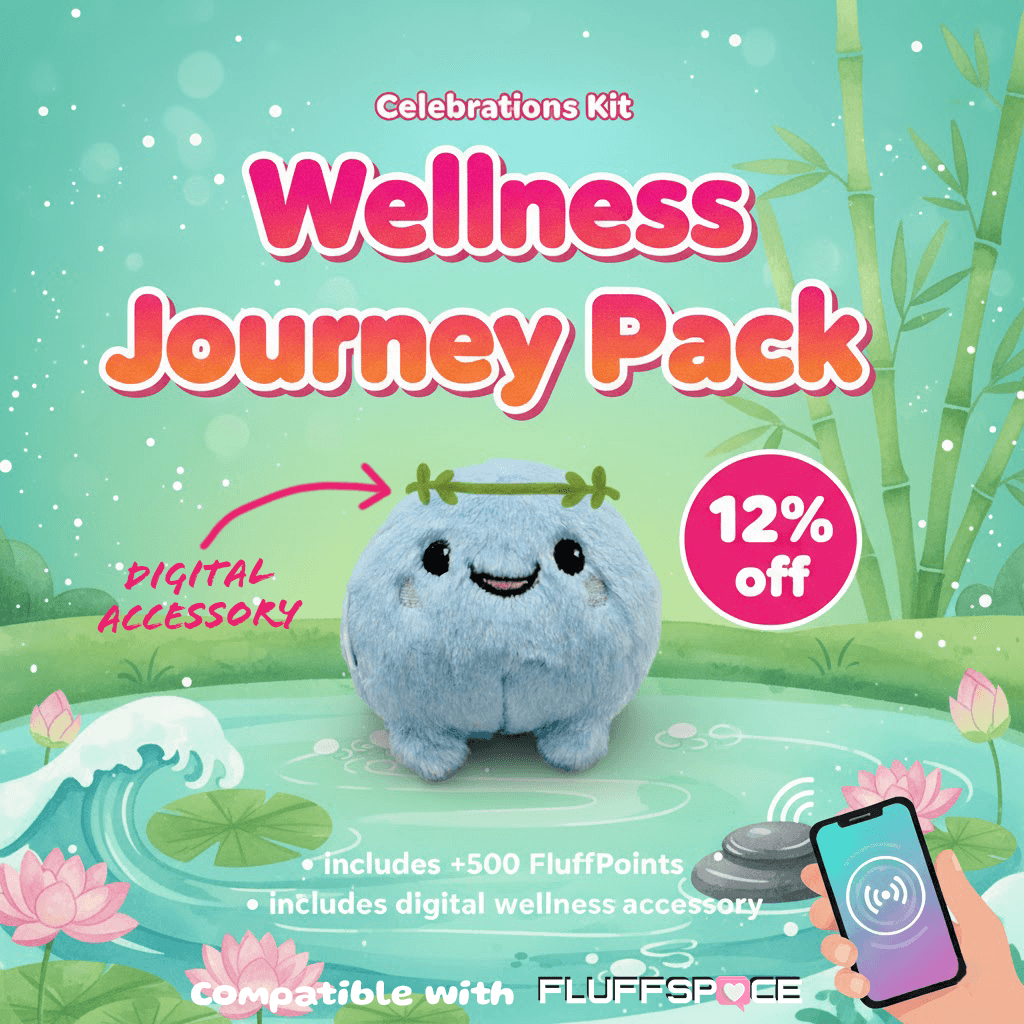 NFC ✦
NFC ✦CandyFlossCuteness Wellness Serenity Plushie
$29.90Something to hold. Touch reaches the nervous system by a much shorter route than reassurance does.
 −17%
−17%Pocket of Kindness — 60 Daily Motivation Cards
$24.90$29.90One card, one sentence, no effort. Nothing to set up or learn.
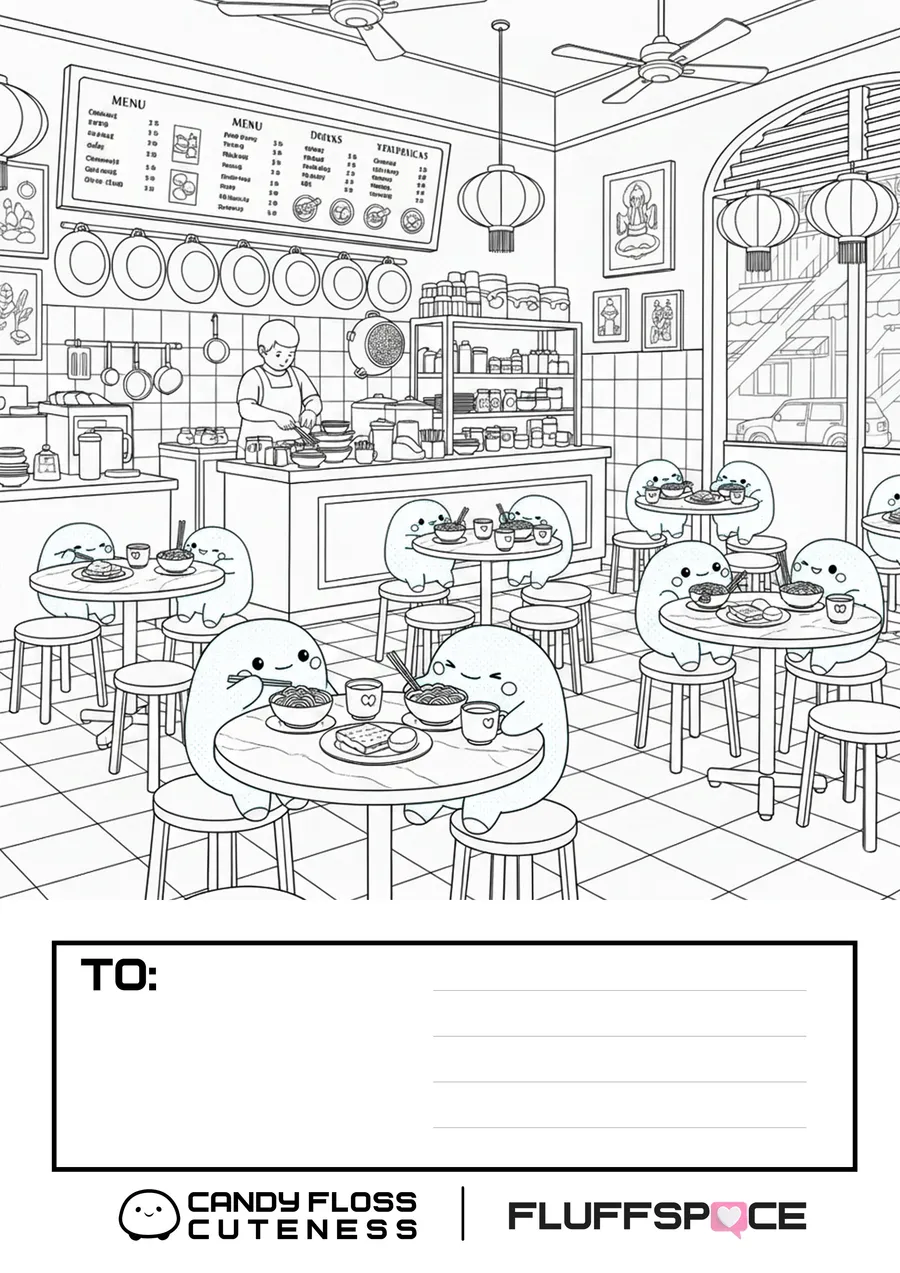 −13%
−13%The ASMR Colouring Book — 26 Pages of Calm
$19.90$22.90Occupies the hands, quiets the head, has no failure condition.
 NFC ✦
NFC ✦Charm Winky CandyFlossCuteness Plushie
$25.90A daily message that keeps arriving in week six, when everyone else has stopped checking in.
- 🧸
CandyFlossCuteness Gift Card
$50.00Removes the risk of choosing wrong, and letting someone choose is itself a kindness when decisions are hard.
The rule: reduce effort, never add a task
Almost everything that comes up when you search for gifts for someone with anxiety or depression fails one test. Ask what the gift will require of the person receiving it. If the answer is anything — watering, cooking, assembling, reading, remembering, keeping alive — it is a task, and tasks are what they have run out of.
This is not a small distinction. Depression in particular is characterised by exactly the deficit that the average thoughtful gift is designed to draw on: initiative. Handing someone a beautiful kit for a hobby they used to enjoy can land as evidence of how far they have fallen, and a plant that dies becomes one more thing they failed at.
What not to give someone who is struggling
- Self-help books
- Reads as homework, and as a diagnosis you have made on their behalf. If the book genuinely changed things for you, say so in conversation and let them ask.
- Fitness and diet items
- Even at their most neutral, these say your body is the problem. To someone whose relationship with their body is already strained, they are worse than nothing.
- Gratitude journals
- The instruction to feel grateful, printed and gift-wrapped. There is decent evidence for gratitude practices in general and almost none for imposing one on someone at their lowest.
- Anything perishable
- A hamper that must be eaten before it turns is a deadline. Food gifts work only when they are the meal, delivered hot, requiring nothing.
- Experiences with a date
- Tickets create an obligation to be well on a particular evening. Cancelling then costs them money and adds guilt to the pile.
What to write in the card
The note matters more than the object, and most people get it wrong by trying to be useful. You are not required to fix anything. You are required only to be visibly, unconditionally still there.
| Instead of | Try | Why |
|---|---|---|
| Let me know if you need anything | I'm bringing dinner Thursday — leave the door on the latch if you'd rather not talk | The first hands the work of asking to the person least able to do it. The second removes the decision. |
| Everything happens for a reason | This is genuinely unfair and I'm sorry | Meaning-making is theirs to do, on their own schedule. Offered early it reads as dismissal. |
| Stay strong | You don't have to be okay with me | Strength framing makes struggling a failure of character and quietly forbids honesty. |
| How are you? | No reply needed. Just thinking of you today | Removes the obligation to compose an answer, which is often the exact barrier. |
If nothing feels adequate, say that. “I don't have anything useful to say. I just didn't want you to think I'd forgotten” is close to perfect, precisely because it does not pretend.
When to send it — the week-six rule
After a bereavement, a diagnosis, a breakup or a breakdown, support arrives in a flood and then stops. The cards come in the first fortnight. By week six the casseroles have ended, the messages have thinned, and everyone has reasonably concluded that things must be settling down. That is usually when it gets hardest.
So if you can only do one thing, do it late. A gift in week six carries a message nothing in week one can: I am still counting. This is also why a gift that recurs — a card a day, a message each morning — outperforms a single grand gesture. It keeps arriving after everyone else has moved on.
Different situations need different things
- Anxiety
- Something to hold. Touch reaches the nervous system by a much shorter route than reassurance does, and having somewhere to put your hands is a real intervention rather than a sentimental one.
- Depression
- Nothing requiring initiation. Warmth, softness, and things that work passively. Practical help — a cleaner, a delivered meal — beats objects almost every time.
- Grief
- Say the person's name. The widespread fear of upsetting someone by mentioning their dead is precisely backwards; being unable to speak about them is the loneliest part.
- Burnout
- Remove decisions. A gift card, a booked service, anything that means one fewer thing to work out. Do not give them a course on resilience.
- Chronic illness
- Comfort at the level of the body: warmth, softness, ease. And ask, once, plainly, what actually helps — people with long-term conditions usually know exactly, and are rarely asked.
If you are worried about their safety
A gift is not a safety plan. If you think someone may be at risk of harming themselves, ask them directly — plainly, without euphemism. Asking does not plant the idea, and the evidence on this is consistent and long-standing.
In Singapore, SOS can be reached on 1767 or by WhatsApp on 9151 1767, at any hour. The Institute of Mental Health helpline is 6389 2222. Tinkle Friend, for primary-school children, is 1800 274 4788 (weekday afternoons, 2.30–5pm). If someone is in immediate danger, call 995.
We make comfort objects, not treatment. Nothing on this page is medical advice, and none of it replaces a doctor, a therapist or a crisis line.
Before you decide
The gift matters less than the thinking behind it. These are the pieces people find most useful.
- Mental Health Gift Ideas: What to Give Someone Who's StrugglingYou want to help. You don't know how. Here's what actually lands — and what to say with it.Gift Guides · 6 min read
- What to Say (or Write in a Card) to Someone Who's StrugglingEverything you're afraid of saying wrong, sorted. Including why "let me know if you need anything" doesn't work.Gift Guides · 5 min read
- Self-Care Package & Gift Box Ideas for Someone with DepressionTwelve things worth putting in, four to leave out, and the note that makes the difference.Gift Guides · 4 min read
- Comfort Gifts in Singapore: Where to Look and What to AvoidSame-day delivery, hawker food as a love language, and the culturally specific mistakes worth knowing about.Singapore · 4 min read
- World Mental Health Day in Singapore: Small Things That Actually HelpAwareness is no longer the problem. On 10 October, here are the small, specific things that change something — for you, for someone else, and at work.Singapore · 6 min read
- Gifts for Someone with Anxiety: 14 Ideas That Actually HelpThe best gifts for an anxious person calm the body, reduce effort and ask nothing back. Here's what helps, what backfires, and what to write with it.Gift Guides · 5 min read
Someone Struggling questions
What should I not give someone who's struggling?
What do I write in the card?
They didn't reply. Did the gift land badly?
Is a plushie an appropriate gift for an adult?
How much should I spend on a gift for someone who is struggling?
Should I send something anonymously?
Is it too late to send something months afterwards?
What if I don't know them well?
More in our full FAQ or ask us directly.